Which Eating Order Helps Prevent a Sharp Glucose Spike - Even When you Eat the Same Foods?
25. 11. 12. PM 2:39
Which Eating Order Helps Prevent a Sharp Glucose Spike - Even When you Eat the Same Foods?
[Table of Contents]
-
What is the Reverse Eating Order Method?
-
The Science of Digestion
-
How the Reverse Eating Order Method Works
[Dr. PASTA’s 3-Line Summary]
-
The Reverse Eating Order method means eating fiber first, protein next, and carbohydrates last.
-
This eating order slows the speed at which food leaves your stomach, helping prevent rapid rises in your glucose levels.
-
It can also help you feel fuller for longer even when you eat the same amount of food, which may support weight control.
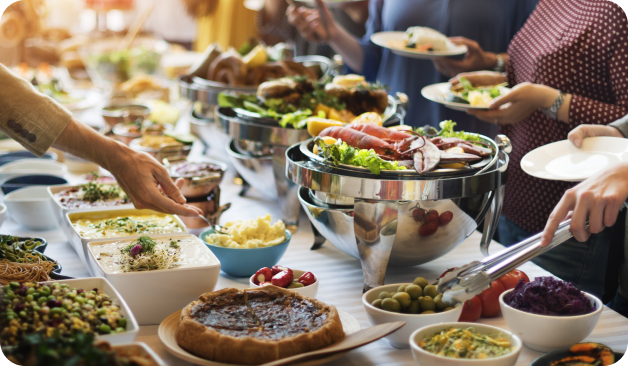
Think back to your last meal — do you remember what you ate first? Most people eat in their preferred order: maybe rice first, or a side dish, or soup. But did you know that the order in which you eat can actually affect how your glucose levels change, even if you eat the exact same foods?
This is where the Reverse Eating Order method comes in — an approach shown to help reduce glucose spikes and support better glucose management, especially for people with diabetes. Let’s find out how it works.
-
What is the Reverse Eating Order Method
Normally, many people eat carbohydrates (like rice or bread) first, followed by protein (like meat or fish), and finish with fiber-rich vegetables. The Reverse Eating Order Method simply flips that order: you start with fiber, then eat protein, and finish with carbohydrates.
For example, in a Korean meal, eat your vegetable side dishes first, then meat or fish, and have rice last. In a Western meal, start with salad, then move on to steak, and finish with bread or pasta. Even for a single-dish meal like jjamppong (spicy seafood noodle soup), you can try eating the vegetables first, then the seafood, and noodles last — that’s also the Reverse Eating Order Method!
-
The Science of Digestion
How can simply changing the order of eating help lower glucose levels? When you eat, food travels from your stomach to your small intestine — a process known as gastric emptying. Carbohydrates like rice, bread, noodles, and tteok (rice cakes) are digested into glucose, which is then absorbed into your bloodstream through the small intestine. The faster this process happens, the quicker your glucose level rises.
So, if carbohydrates move quickly through your stomach, your glucose spikes rapidly. But if food passes more slowly — especially when you’ve eaten fiber or protein first — glucose enters your bloodstream more gradually, preventing a sharp rise in glucose levels.
Interestingly, many diabetes medications work the same way — by delaying gastric emptying to reduce post-meal glucose spikes.
-
How the Reverse Eating Order Method Works
By eating vegetables or protein-rich foods (like fish, meat, tofu, or eggs) before carbohydrate-heavy foods, you slow down digestion and delay gastric emptying. This means your glucose levels won’t rise as sharply compared to when you eat bread, rice, or noodles first.
Since food stays in your stomach longer, you also feel fuller for a longer time, which can naturally lead to eating less overall. Thanks to the fullness created by the fiber you eat first, your overall food intake tends to decrease, and the proportion of carbohydrates in your total nutrients naturally becomes lower. In other words, when you start your meal with fiber, you tend to consume fewer carbohydrates — and this helps not only with glucose control but also weight management.
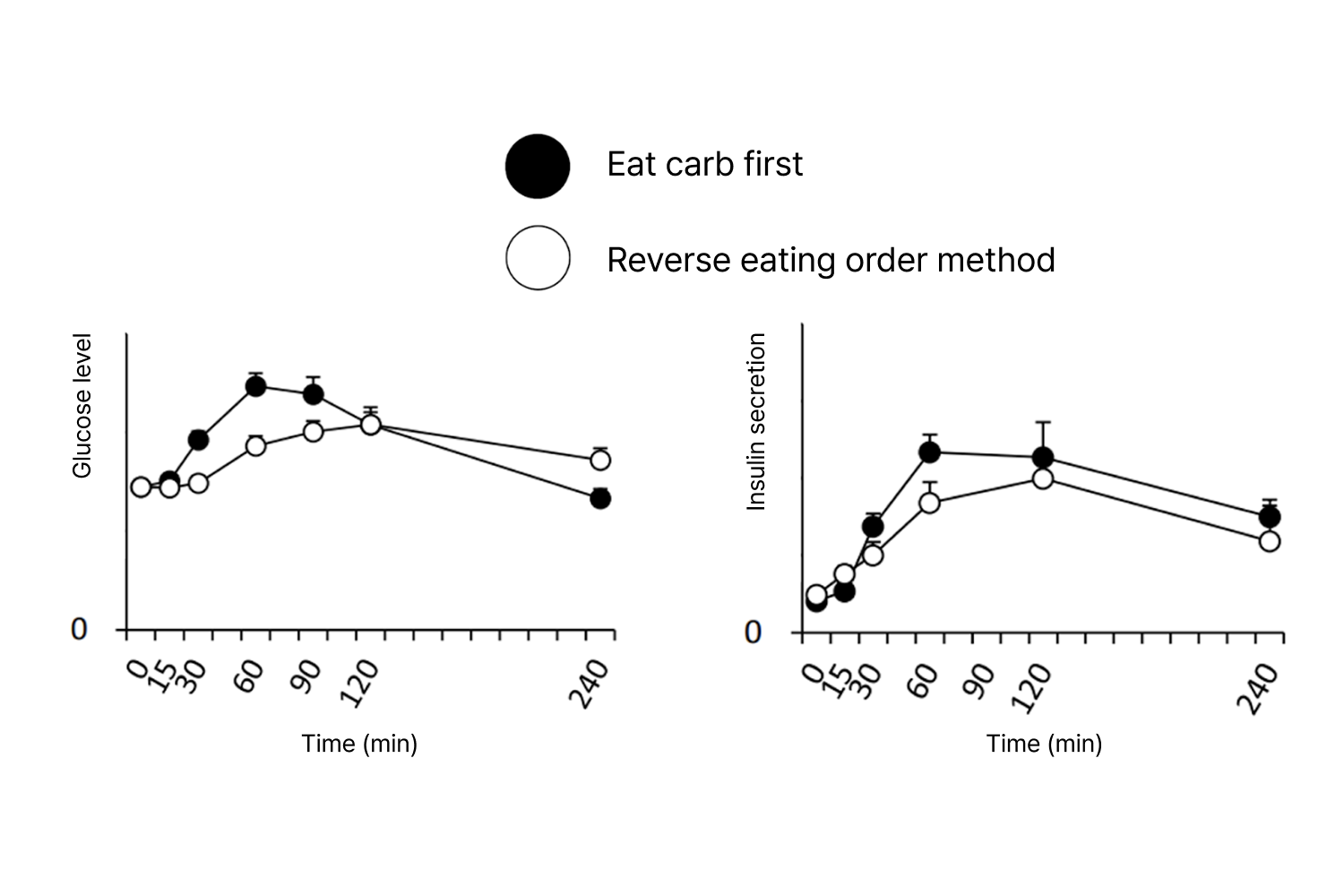
In fact, the fiber you eat first slows down the digestion of carbohydrates. Since the digestion and absorption of carbs are delayed, glucose is released more gradually into the bloodstream, reducing the amount of insulin needed. When glucose levels rise sharply, the excess glucose that isn’t used for energy is easily converted into fat. By preventing large spikes in glucose levels, the Reverse Eating Order Method helps your body use more of the glucose for energy in your muscles and cells — leaving less to be stored as fat. Additionally, since fiber is relatively low in calories and helps you feel full sooner, you naturally eat less overall — meaning you’re less likely to gain weight even with the same foods.
Here are the other ways to slow digestion, delay gastric emptying and reduce glucose spikes.
-
Eat slowly. Taking time with each bite naturally delays gastric emptying.
-
Include fiber, protein, and healthy fats. These nutrients slow digestion, but be cautious with fats — choose foods rich in unsaturated fatty acids instead of high-calorie saturated fats.
-
Prefer solid foods over liquids. Liquids leave the stomach faster, so unless you need quick energy, opt for whole or solid foods instead.
Many people already know that eating vegetables or salad first, then protein, and carbs last can help prevent a sharp glucose rise — but this habit does more than that. It also reduces total calorie intake, helping with both glucose control and weight management.
However, remember the following: even if you follow this method, eating too much overall can still lead to weight gain. So try adjusting your portion sizes while keeping this eating order in mind — that way, you can experience the dual benefits of better glucose control and healthier weight management.
References
-
Wansink, B., Hanks, A. S. Slim by design: serving healthy foods first in buffet lines improves overall meal selection. PloS one, 2013;8(10): e77055. doi : 10.1371/journal.pone.0077055. PMID : 24194859
-
Imai S, Matsuda M, et al. A simple meal plan of 'eating vegetables before carbohydrate' was more effective for achieving glycemic control than an exchange-based meal plan in Japanese patients with type 2 diabetes. Asia Pac J Clin Nutr. 2011;20(2):161-8. PMID: 21669583.
-
Ministry of Health and Welfare, The Korean Nutrition Society. Dietary reference intakes for Koreans 2020. Sejong:Ministry of Health and Welfare; 2020.
-
Kuwata, Hitoshi, et al. "Meal sequence and glucose excursion, gastric emptying and incretin secretion in type 2 diabetes: a randomised, controlled crossover, exploratory trial." Diabetologia 59 (2016): 453-461.
-
Goyal, Raj K., Vivian Cristofaro, and Maryrose P. Sullivan. "Rapid gastric emptying in diabetes mellitus: Pathophysiology and clinical importance." Journal of Diabetes and its Complications 33.11 (2019): 107414.
-
Jalleh, Ryan J., et al. "Normal and disordered gastric emptying in diabetes: recent insights into (patho) physiology, management and impact on glycaemic control." Diabetologia 65.12 (2022): 1981-1993.
-
Ma J, Stevens JE,et al. Effects of a protein preload on gastric emptying, glycemia, and gut hormones after a carbohydrate meal in diet-controlled type 2 diabetes. Diabetes Care. 2009;32(9):1600-2. doi: 10.2337/dc09-0723. PMID: 19542012.
-
Gentilcore D, Chaikomin R, et al. Effects of fat on gastric emptying of and the glycemic, insulin, and incretin responses to a carbohydrate meal in type 2 diabetes. J Clin Endocrinol Metab. 2006;91(6):2062-7. doi: 10.1210/jc.2005-2644. Epub 2006 Mar 14. PMID: 16537685.
-
Korean Diabetes Association. Clinical Practice Guidelines for Diabetes. 2023